
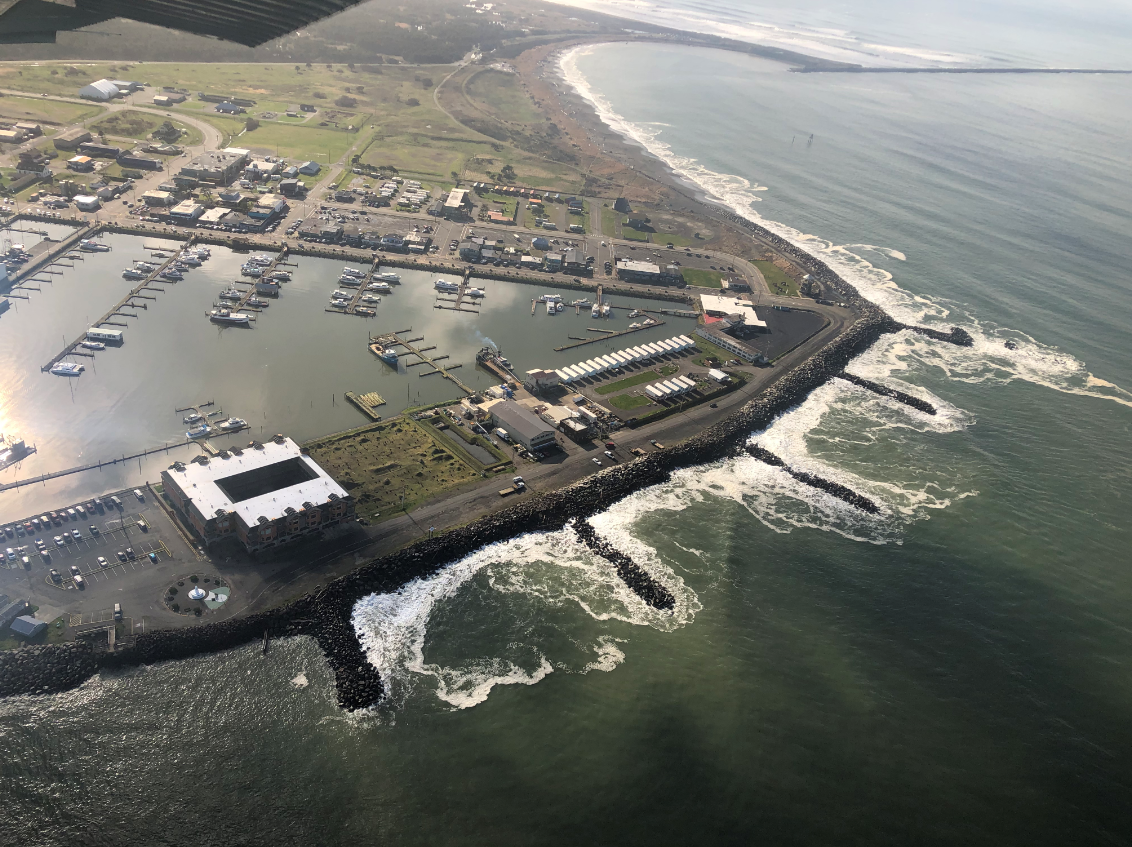
Earlier this week, Surfrider Washington joined coastal planners, researchers, nonprofits, agencies, Tribal leaders, and community partners from across the state for the Washington Coastal Hazards Resilience Network (CHRN) Annual Meeting.
This gathering has continued to grow year after year, which is not surprising given how quickly our coasts are changing and hazards are compounding. Building resilience to these changes means working across disciplines, jurisdictions, and communities to prepare for sea level rise, erosion, flooding, water quality impacts, and habitat loss. Many of the wicked problems we’re facing do not fit neatly within single agencies or funding categories, so opportunities to connect, share, and brainstorm solutions together are more critical than ever.
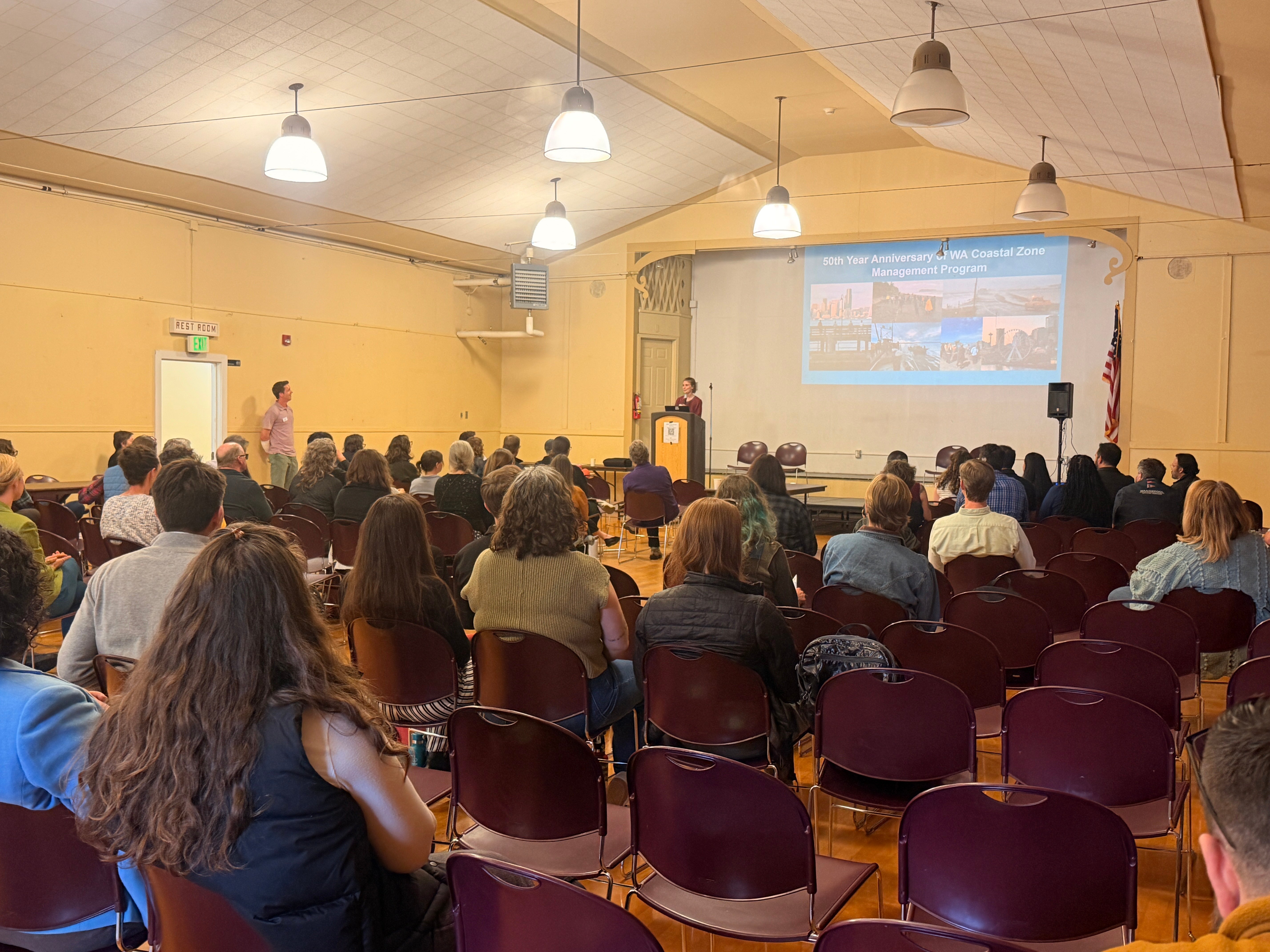 Nerds unite! So many #FriendsOfTheOcean in one room
The day opened with a look at the broader state of resilience work in Washington, reflecting on how adaptation efforts have evolved over time and where we need to go next. Years ago, we were still working to confirm the science. Now, the science is clear: we need action. Speakers highlighted lessons from more than a decade of integrated floodplain investments and discussed how adaptation work increasingly centers on implementation, collaboration, and communities themselves. For Surfrider, that shift feels familiar. Effective coastal protection has always depended on connecting environmental priorities with community needs and ensuring people have a voice in shaping solutions.
One of the strongest examples of that approach came during discussions around sea level rise planning. Sessions highlighted Tribal-led adaptation work, statewide shoreline planning updates, and efforts to understand how flooding risks overlap across rivers, shorelines, and communities. While the science behind these efforts can be complex, the underlying message was straightforward: planning for future conditions cannot happen in isolation.
That lesson surfaced again and again throughout the day's lightning talks and resilience fair.
Projects ranged from flood resilience efforts in Pacific County and Hood Canal communities to adaptation planning in the Duwamish Valley and Commencement Bay. More than thirty interactive stations explored everything from nature-based shoreline solutions and transportation planning to storytelling, public health, workforce development, and community engagement.
A few themes consistently stood out:
Nature-based solutions are moving from concept to implementation. Projects around Washington are increasingly looking toward marshes, restored habitat, and natural systems as tools for reducing risk while creating ecological benefits.
Communities are leading. Whether through Tribal planning efforts, neighborhood engagement, or local adaptation initiatives, the most effective work starts with people who know these places best.
Communication matters as much as science. Several sessions focused not only on understanding risks but on helping people see and connect with them through storytelling, education, and creative engagement.
This last point really resonated when I think about our chapters and how much they do - not just in raising awareness about these issues, but how they build trust and community along the way.
The science of behavior change is clear: science alone won’t change behavior. People act when they can connect information to places they care about—whether that's a favorite surf break, a beloved beach trail, a favorite shellfish bed, or a community waterfront.
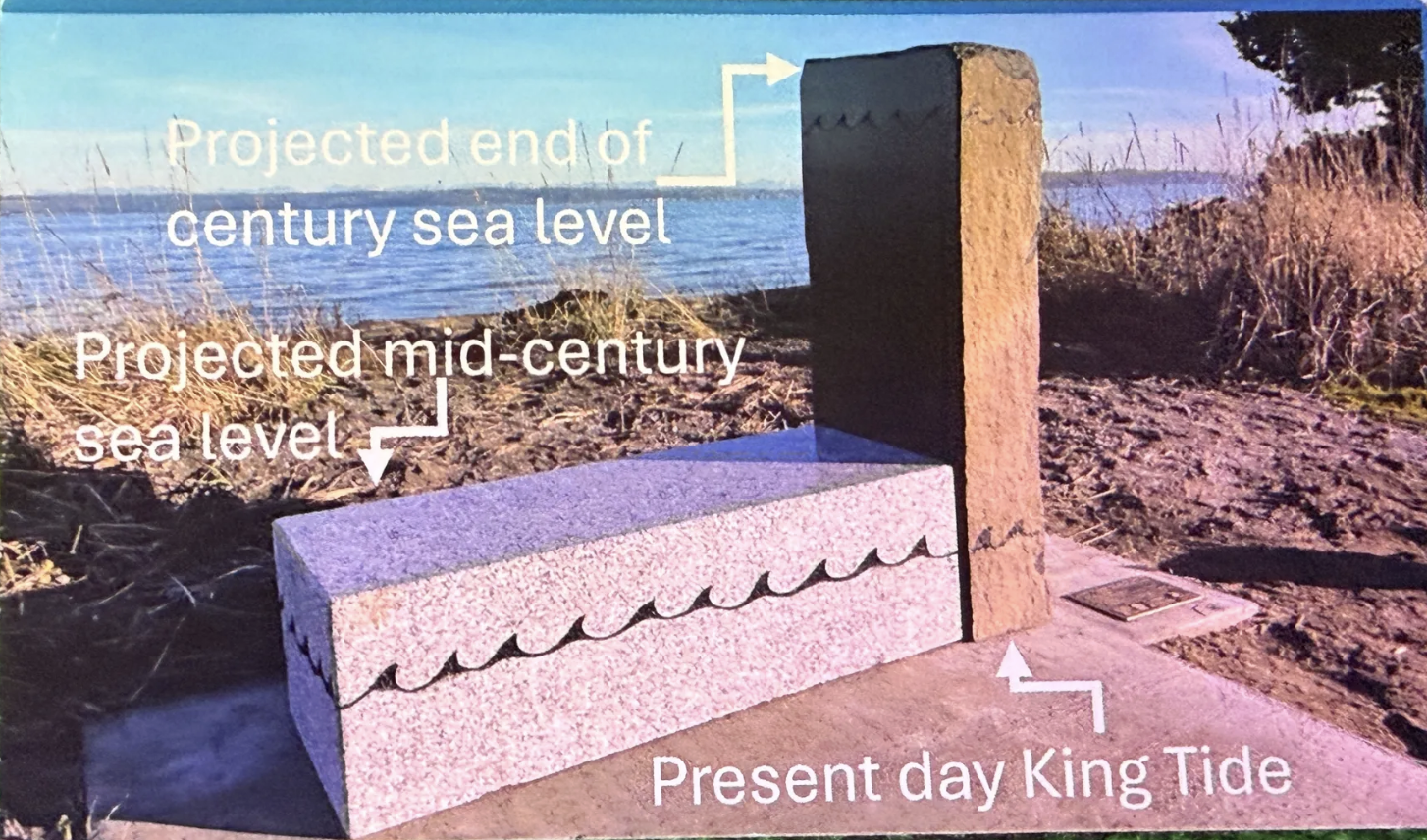 One of the cool art installations that helps people visualize what future sea level rise will feel like
As Washington continues to face rising seas and increasing coastal hazards, conversations like these are increasingly critical. Coastal resilience isn't simply about responding to change after it happens. It's about building systems, partnerships, and communities that are prepared long before the next storm arrives.
We're grateful to CHRN for creating space for these conversations and for bringing together so many people working toward resilient, healthy coastlines.
 While completing her master's degree in Sustainable Development & Conservation Biology from the University of Maryland, Liz taught sustainability to undergraduate students while also volunteering as a docent at the Smithsonian Natural History Museum’s Ocean Hall. As Washington and Alaska Regional Manager, she supports the organization's six Washington chapters and the Kenai Peninsula Chapter in their amazing work.