
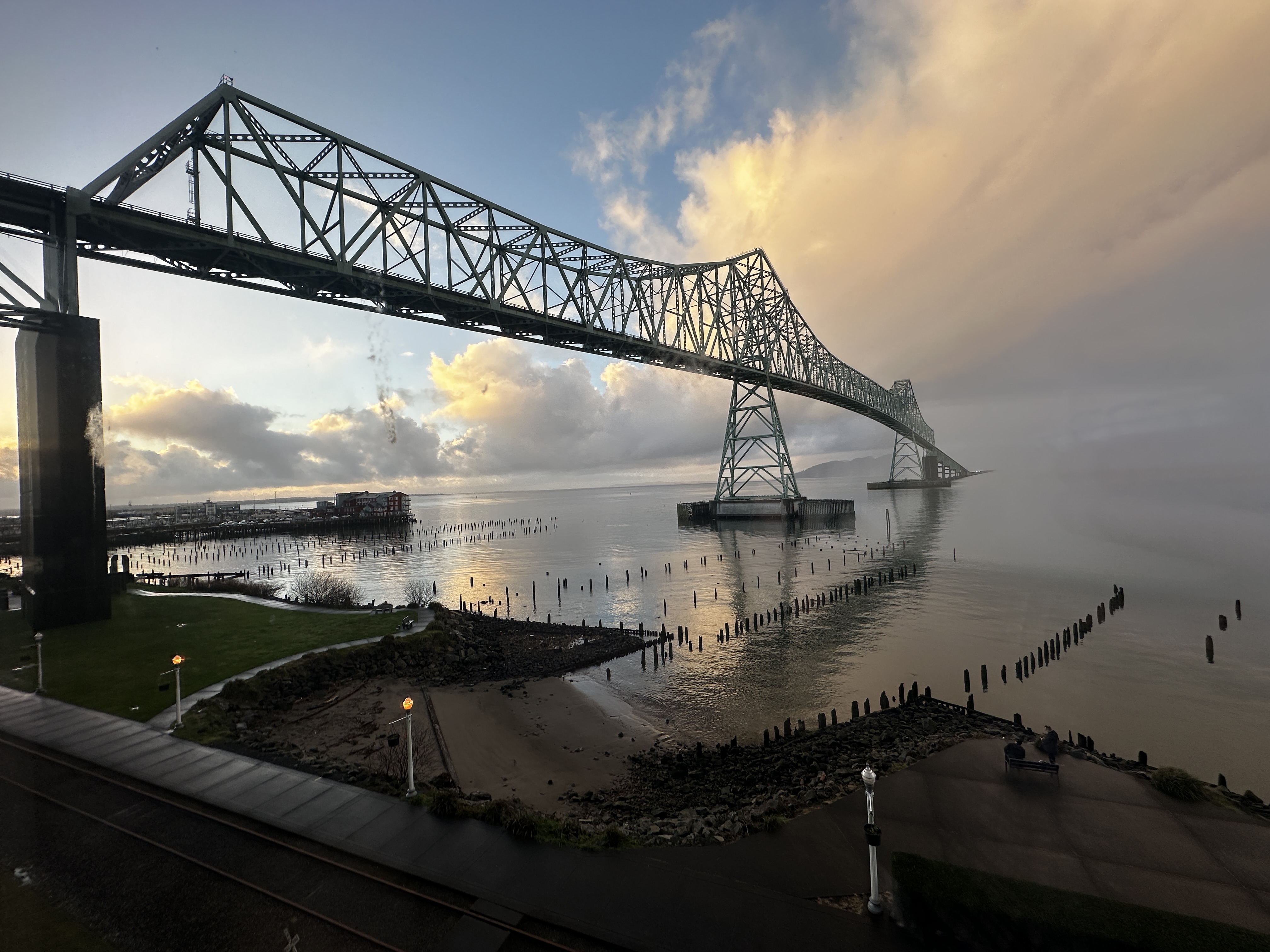
Strengthening resilience across the Pacific Northwest
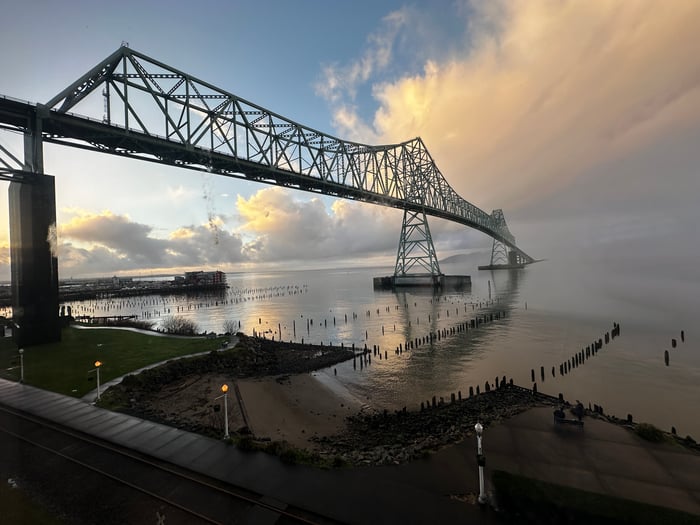
Tuesday, February 10, marked the close of the third annual Navigating Coastal Hazards Workshop, a powerful two-day gathering of coastal leaders, scientists, planners, emergency managers, Tribal partners, community advocates, and researchers in Astoria, Oregon. Hosted by the Cascadia Coastlines & People Hazards Research Hub (Cascadia CoPes Hub) and partners, this workshop continues to be a cornerstone event for advancing coastal resilience dialogue and action throughout the Pacific Northwest.
Building on momentum
Following the first workshop in 2024 and an expanded second workshop in 2025, this year carried forward a clear mission: advancing collaborative research, strengthening partnerships, and scaling innovative strategies to address evolving coastal hazards. Participants continue to bridge research and practice, and to explore how communities across Washington, Oregon, Northern California, and British Columbia can better prepare for the multifaceted threats facing our coastlines — from chronic flooding and erosion to extreme storms and compound hazards.
What we got into
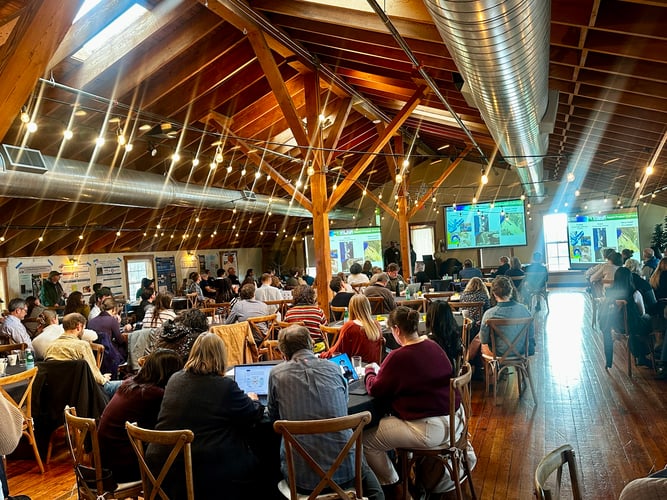
Held February 9–10 at the Red Building in Astoria, the workshop brought diverse perspectives to the table to advance shared resilience goals. Attendees engaged in:
- Interactive sessions and discussions focused on adaptive capacity, decision support tools, and community needs
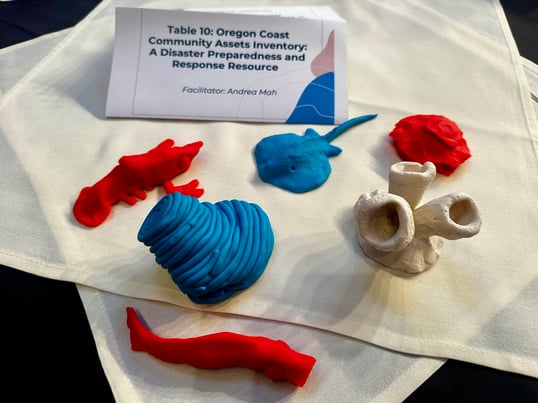
- Poster presentations and conversations that highlighted ongoing research and community projects from across the region
- Field trips that centered real-world learning outside the workshop space. One group visited a coastal resilience project in Wahkiakum County, Washington, where local restoration efforts are addressing flooding and habitat connectivity. You can check out this storymap for more info. The other trip explored flood measurement strategies in the Lower Willapa River area, underscoring the role of community-driven monitoring in adaptation planning
These field experiences demonstrated how local action and scientific insights come together to inform on-the-ground approaches — whether that’s installing nature-based defenses, monitoring flood dynamics, or fostering strong interagency networks.
Some other highlights included speaking with the people working to ensure the long-term resilience of our coastal places, and seeing the fruition of years of advocacy for policies and funding that support this work. Some examples include:
- We spoke with individuals working for tribal climate programs whose positions are funded in part by the Climate Commitment Act, which Washingtonians resoundingly supported and joined together to stop a harmful ballot initiative in 2024 that would have revoked the CCA.
- Many of these local collaborative projects are facilitated and supported by members of the COHORT (Coastal Hazards Organizational Resilience Team). We advocated for funding for the COHORT back in 2023, and continue to be impressed by what this inter-agency team has accomplished.
- We are seeing communities incorporate recommendations outlined in the 2023 update to the Growth Management Act, which requires planners to account for a changing climate and rising seas when planning future development
Why it matters
At Surfrider Washington, we’ve long championed community-based, science-driven approaches to coastal conservation and hazard management. Workshops like Navigating Coastal Hazards provide a crucial platform to:
- Share what local communities are experiencing firsthand, from erosion-impacted beaches to infrastructure at risk from rising seas.
- Inform advocacy with the latest research and data on coastal hazard trends and adaptation options.
- Build stronger networks with partners in academia, government, Tribes, and nonprofit sectors to push for policies and funding that support resilient shorelines.
The conversations and connections forged in Astoria will help guide our efforts — from supporting nature-based solutions like habitat restoration to advocating for equitable, community-centered planning that protects both people and the places we love.
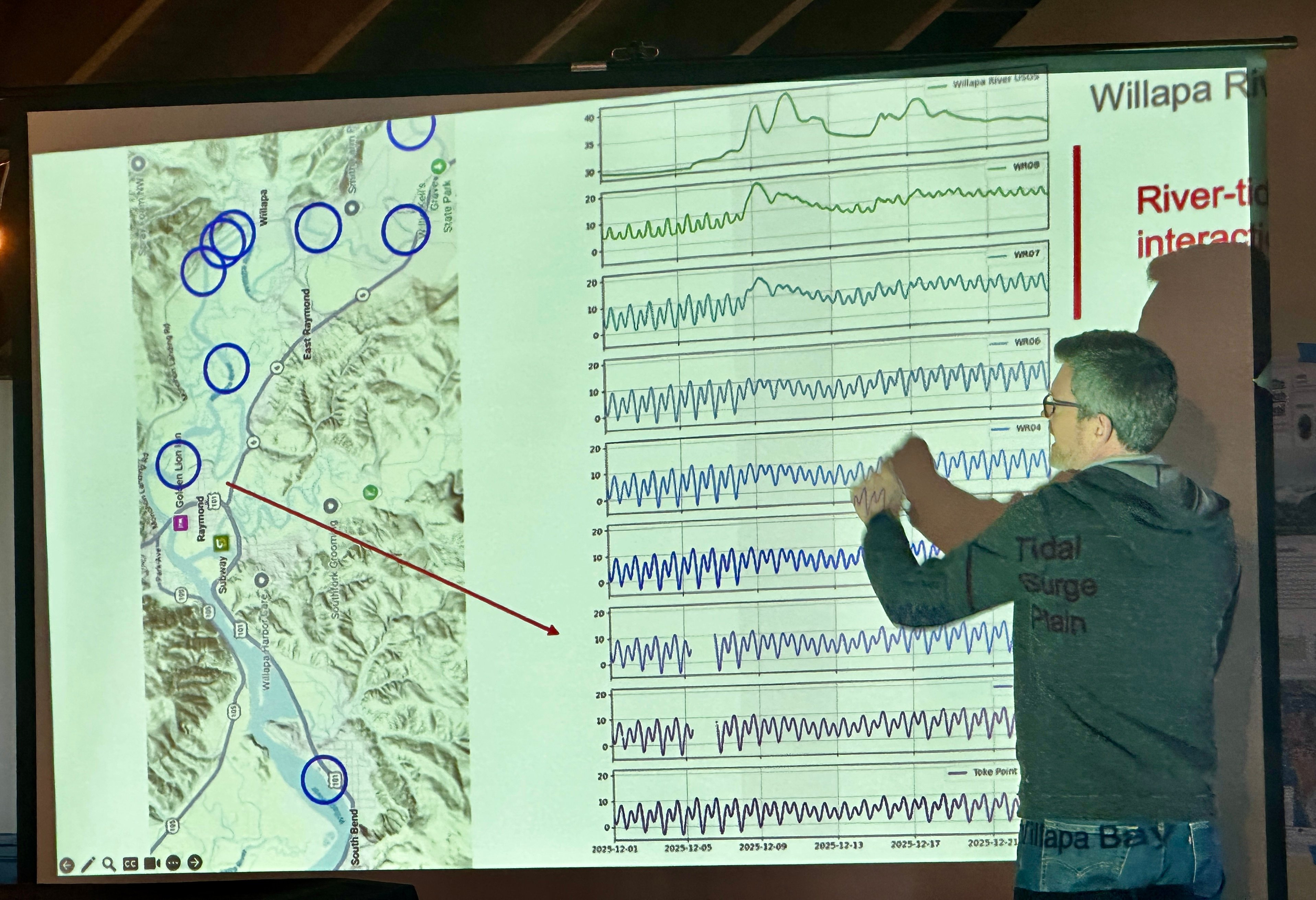 A researcher at UW describes compound flooding, showing graphs of water levels in the Lower Willapa over time in response to rain events and tides
Looking Ahead
Coastal hazards are complex, dynamic, and deeply local — but they are also regional in scope. Events like the Navigating Coastal Hazards Workshop remind us that resilience doesn’t happen in isolation. It grows from shared knowledge, collaboration across sectors, and sustained engagement with communities that know these landscapes best.
With each workshop, we gain momentum — not just in data and tools, but in the relationships and shared commitments that make lasting resilience possible.
 While completing her master's degree in Sustainable Development & Conservation Biology from the University of Maryland, Liz taught sustainability to undergraduate students while also volunteering as a docent at the Smithsonian Natural History Museum’s Ocean Hall. As Washington and Alaska Regional Manager, she supports the organization's six Washington chapters and the Kenai Peninsula Chapter in their amazing work.