
Require Low-Sulfur Fuels: A Simple, Science-Based Solution to Ship Pollution in Washington
Washington’s marine waters are central to who we are—from the health of our coastal ecosystems to the livelihoods and economies that depend on clean water. Protecting these waters requires bold, practical action grounded in science and community leadership. That’s why Surfrider Foundation is supporting legislation to require low-sulfur fuels for large ocean-going vessels operating in Washington waters.
Why Low-Sulfur Fuels Matter
This legislation will significantly improve air and water quality for marine ecosystems and nearshore habitats, salmon and forage fish, shoreline communities, and marine-dependent economies across Washington. Requiring low-sulfur fuels is a proven, effective solution already in place in California. Washington now has an opportunity to meet that standard and stop a major source of marine pollution.
The Problem: Scrubbers Pollute Our Waters
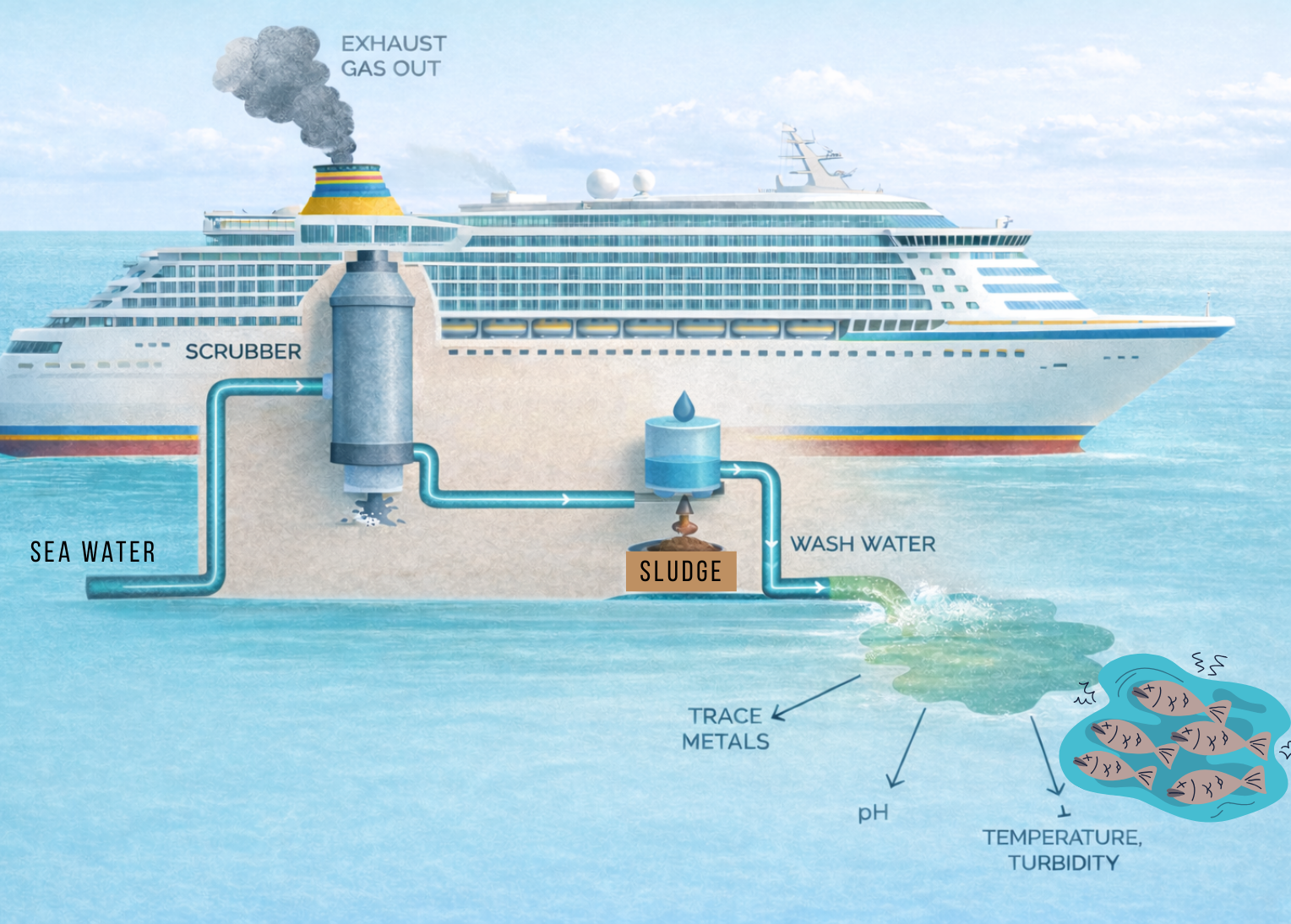
Many large ships use exhaust gas cleaning systems, commonly known as scrubbers, to burn cheaper and more polluting heavy fuel. While scrubbers remove sulfur from ship exhaust, they do not eliminate pollution. Instead, the waste scrubbed by the cleaning systems is dumped directly into our waters. Scrubber discharge contains heavy metals, toxic hydrocarbons such as polycyclic aromatic hydrocarbons (PAHs), and highly acidic waste that contributes to ocean acidification. This pollution harms marine life, threatens public health, and undermines the resilience of coastal and marine ecosystems.
The Science Is Clear
Scrubbers shift pollution from air to water, with more than 82 percent of scrubber-equipped ships discharging waste directly overboard into sensitive marine habitats. Heavy metals and oil-based chemicals move through marine food webs, affecting wildlife and people. Most ships already comply with emissions rules by using low-sulfur fuels. Ships burning heavy fuel with scrubbers produce more air pollution than those using low-sulfur fuels, and vessels with scrubbers can switch to low-sulfur fuels without new or modified engines.
How This Bill Protects What We Love
Passing this legislation would prevent pollution by eliminating scrubber discharge into Washington waters, protect marine ecosystems, including eelgrass, bull kelp, salmon, forage fish, and marine mammals, and support healthier communities by reducing air and water pollution that impacts public health, aquaculture, and coastal economies.
Community-Led Action for Cleaner Waters
Surfrider Foundation is working to help position this bill for successful passage in the upcoming legislative session. This effort reflects the power of collaboration and grassroots advocacy—core principles of Surfrider Foundation Washington. We are grateful for our environmental NGO partners and for the leadership of prime bill sponsors Representative Debra Lekanoff and Senator Liz Lovelett, whose work advances healthy oceans and thriving coastal communities.
A Call to Action
Surfrider Foundation is part of a coalition of nine environmental organizations supporting HB 1652 and SB 5519, legislation designed to reduce environmental impacts associated with certain ocean-going vessels.
Your voice will be essential as we work to require low-sulfur fuels. Stay engaged by signing up for action alerts and speaking up for clean water, clean air, and healthy marine ecosystems. Together, we can turn the tide on ship pollution and protect Washington’s coast for generations to come.
