
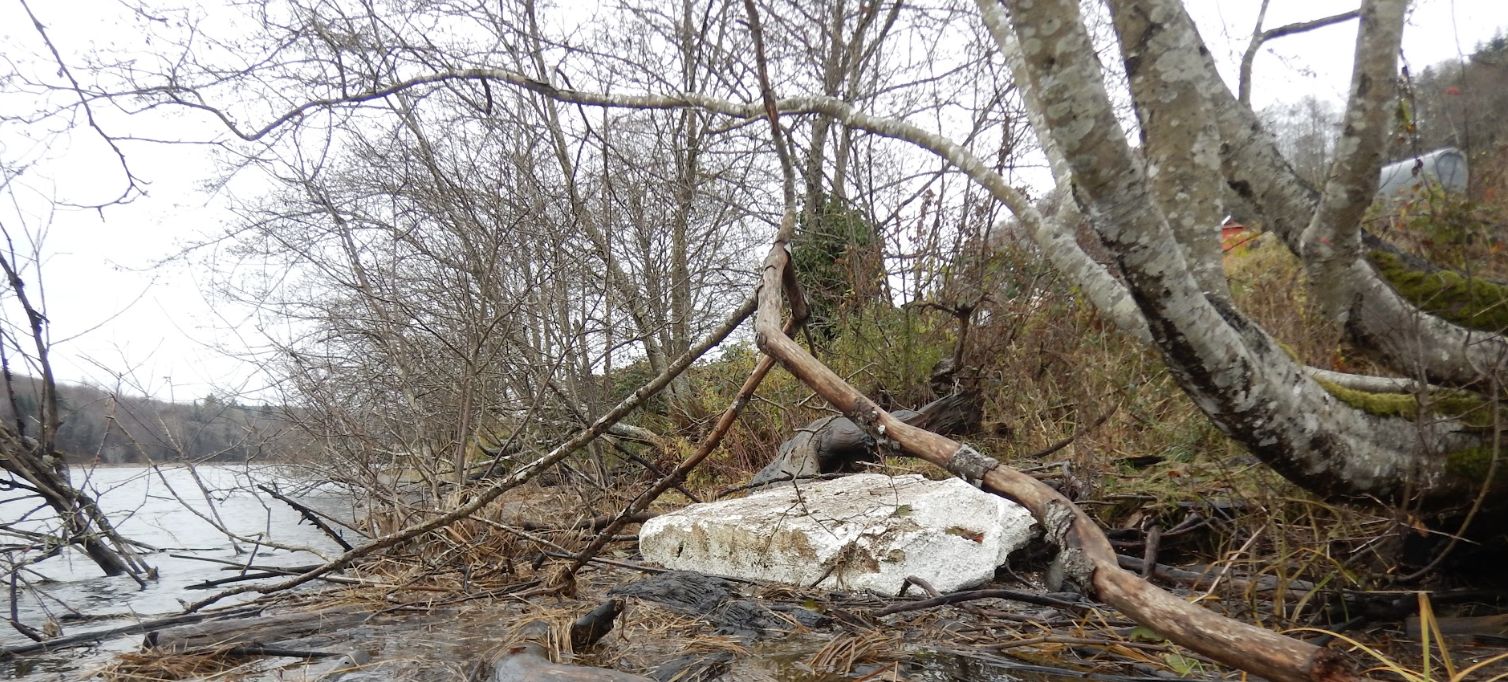
In April 2023, Washington State passed a landmark plastics-pollution bill — House Bill 1085 — which, among other strong measures, targets one of the most persistent but overlooked sources of marine debris: foam-filled floats under docks and over-water structures.
This law (part of what we called our Trifecta Plastics Bill), which went into effect on January 1, 2024, prohibits the installation or repair of floating docks that use expanded or extruded polystyrene (EPS/XPS) foam unless that foam is fully enclosed in concrete, aluminum, steel, or a shell of plastic at least 0.15 inches thick. Any open or soft/film-wrapped foam is banned. More info can be found on Ecology’s docks & block website.
Why Fighting Foam Docks Matters
What we call styrofoam (which is actually expanded polystyrene, or EPS) does not biodegrade. It breaks into smaller and smaller pieces, which are lightweight and travel easily to and through the marine environment. These tiny toxic pellets can enter the food web, harming marine organisms and ending up on our plates and in our bodies.
This plastic pollution knows no boundaries, either - the lightweight foam fragments drift with the wind and currents far beyond where they originated from. When we pass legislation here in Washington, it helps marine ecosystems throughout the region, and that benefit goes both ways.
For example, in British Columbia alone, 50-70% of shoreline pollution (by volume) is polystyrene foam, largely from aquatic infrastructure. Surfrider Canada’s Foam Free Waters campaign represents a multi-year effort involving huge cleanups and extensive collaboration and organizing. We are stoked to highlight and support the efforts of our northern neighbors to implement a federal ban on foam docks throughout Canada.
Check out their short video below:
Bringing It Home: A Local Foam Dock Cleanup
While the foam dock law will prevent a lot of foam from ending up in the environment, there is still a huge legacy of existing and derelict docks out there, slowly leaking toxic foam particles into our waterways, and removing them is no easy task. Luckily, our partners at WA Coastsavers and our amazing volunteers are up to the challenge!
In late October, a hardcore cleanup crew of 19 kickass humans, with the support of WDFW, secured a dumpster and some heavy machinery and braved the wind and rain to remove 3,440 lbs of old dock debris from the Snow Creek waterway. Snow Creek provides vital salmon habitat, so clearing this inlet up supports a healthy ecosystem for critters of all kinds - fish, orcas, people, and more! This hands-on work underlines why the legislation matters: we’re not just talking about potential pollution, we’re witnessing it.
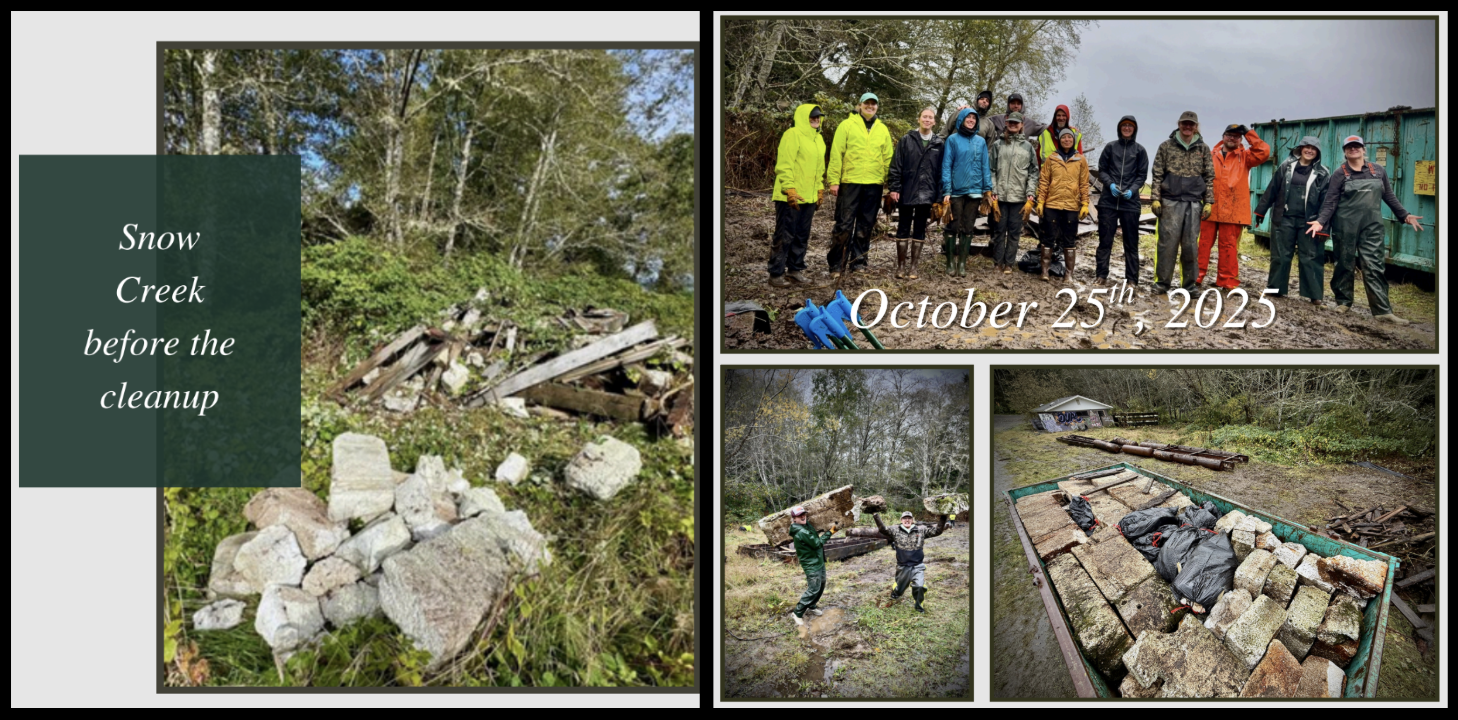
Our intrepid crew of volunteers hoisting hundreds of pounds of old wet foam out of the creek and into the dumpster where it belongs! Photo credit: Megan Juran
Ways you can take action:
- Report any large debris (including derelict docks, vessels, creosote logs, etc), to the MyCoast app
- Support your local cleanup group, whether that’s a Surfrider Chapter, WA Coastsavers, or any of the myriad other organizations dedicated to picking up trash
- Advocate with your local marina, homeowner association or dock-contractor to ask: “Are your floats foam-filled? Are they fully enclosed? If not, what are the alternatives?”
- Help raise awareness among coastal homeowners - many may not realize their floats are made of decomposing foam and leaking microplastics into the water
- Participate in clean-ups focused on foam fragments
 While completing her master's degree in Sustainable Development & Conservation Biology from the University of Maryland, Liz taught sustainability to undergraduate students while also volunteering as a docent at the Smithsonian Natural History Museum’s Ocean Hall. As Washington and Alaska Regional Manager, she supports the organization's six Washington chapters and the Kenai Peninsula Chapter in their amazing work.