Most Washingtonians have heard of Olympic National Park.
Far fewer know that just offshore lies another nationally protected landscape, one that stretches nearly 3,200 square miles along Washington's rugged Pacific coast.
It's called the Olympic Coast National Marine Sanctuary, and for more than 30 years it has protected one of the most extraordinary marine ecosystems in North America.
From Cape Flattery to Copalis Beach, the sanctuary safeguards kelp forests, rocky reefs, submarine canyons, offshore islands, and vital habitat for whales, seabirds, salmon, forage fish, and countless marine species. It also encompasses the usual and accustomed marine territories of the Makah Tribe, Quileute Tribe, Hoh Tribe, and Quinault Indian Nation, making it a place of deep cultural significance as well as ecological importance.
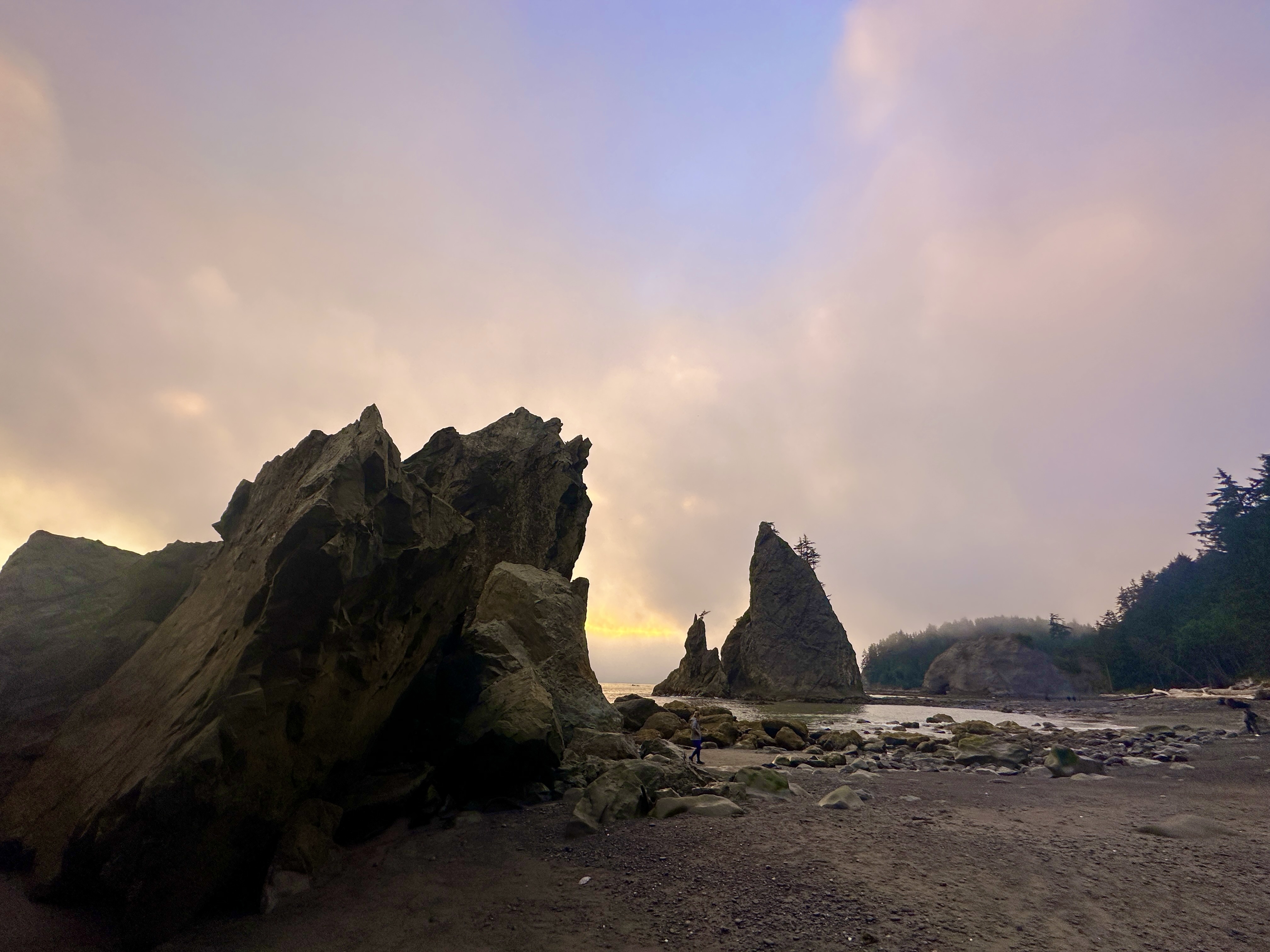
Unlike a national park on land, there are no entrance gates or visitor stations marking where the sanctuary begins. Every time you paddle a kayak, surf a wave, watch migrating gray whales, explore a tidepool, fish offshore, or simply walk one of Washington's wild beaches, there's a good chance you're experiencing the sanctuary without even realizing it.
Today, NOAA is updating the sanctuary's Management Plan, a process that only occurs about once every decade. The plan will help guide how the sanctuary responds to emerging challenges such as climate change, ocean acidification, marine debris, invasive species, changing ocean uses, and increasing recreation over the coming years.
This update is about much more than regulations. It is an opportunity to shape the future of one of Washington's most important public resources by identifying priorities for scientific research, education, Tribal co-management, conservation, recreation, and community stewardship.
The Surfrider Foundation recently submitted comprehensive comments supporting the overall direction of NOAA's Draft Management Plan while recommending additional investments in science, staffing, public engagement, and collaborative partnerships that will help ensure the sanctuary continues to thrive.
One of our central recommendations is simple: great conservation depends on great partnerships.
For decades, Olympic Coast National Marine Sanctuary has brought together Tribal Nations, researchers, local governments, volunteers, educators, fishermen, recreational users, nonprofit organizations, and coastal communities to solve conservation challenges that no single organization could address alone. That collaborative model has become one of the sanctuary's greatest strengths and is one we believe deserves continued investment.
We also encouraged NOAA to continue expanding ocean science, support long-term monitoring of changing ocean conditions, recognize the value of compatible recreation, strengthen community education, and invest in the people and partnerships needed to turn an ambitious management plan into lasting conservation success.
Healthy oceans don't happen by accident. They require good science, thoughtful management, and people who care enough to protect the places they love.
Whether you've surfed at Hobuck, explored the tidepools at Shi Shi Beach, watched whales from Cape Flattery, paddled Neah Bay, or simply enjoyed a walk along the Peninsula's coast, you've experienced the benefits of Olympic Coast National Marine Sanctuary.

 Peter is a lifelong Washingtonian, surfer, and environmentalist. He has a degree in Geography and Environmental Policy from Evergreen State College and spent eight years working in the Washington Legislature.