

WE ARE! Washington is NUMBER ONE in blowing up the beach!
While that’s not a thing to celebrate, what IS worth celebrating is the hundreds of volunteers that turned out to pick up a record amount of smoldering trash from our beaches this July 5th.
This year, volunteers with Surfrider, Washington Coastsavers, and the too-many-to-list partners and passionate humans collectively removed a record-breaking 155,000 pounds of smoldering trash from our Pacific and Puget Sound beaches! And that doesn’t include the literal dumpster fires that incinerated thousands more pounds of debris before it could be weighed and disposed of.
 Volunteers putting out a trash fire on the beach during a July 5th cleanup in Ocean Shores
Holy smoking garbage, Batman - what’s the deal?!
Several factors combined to create a banner year for blowing up the beach. For one, July 4th fell on a Saturday, so folks had plenty of time to drive to the beach, party hard, and sleep in the next morning. On top of that, this year was America’s 250th birthday, resulting in a huge party and an even bigger mess to clean up afterwards. It also helps to have a veritable army of non-profits, agencies, coalitions, and rogue do-gooders, many of whom are coordinated through the Washington Clean Coast Alliance (aka Coastsavers), primed and ready to deploy on July 5th. So it’s hard to say if we’re the worst at trashing the beach, or the best at cleaning it up. Maybe both!
What comes next?
Surfrider’s Beach Cleanup Report provides an annual glimpse into what types of trash (and how much of it) we’re finding on beaches across the country. This year’s report lists Washington as having the top two biggest cleanups - Twin Harbors and Ocean Shores (shout out to the Grays Harbor and Olympia Chapters for holding it down out there!).
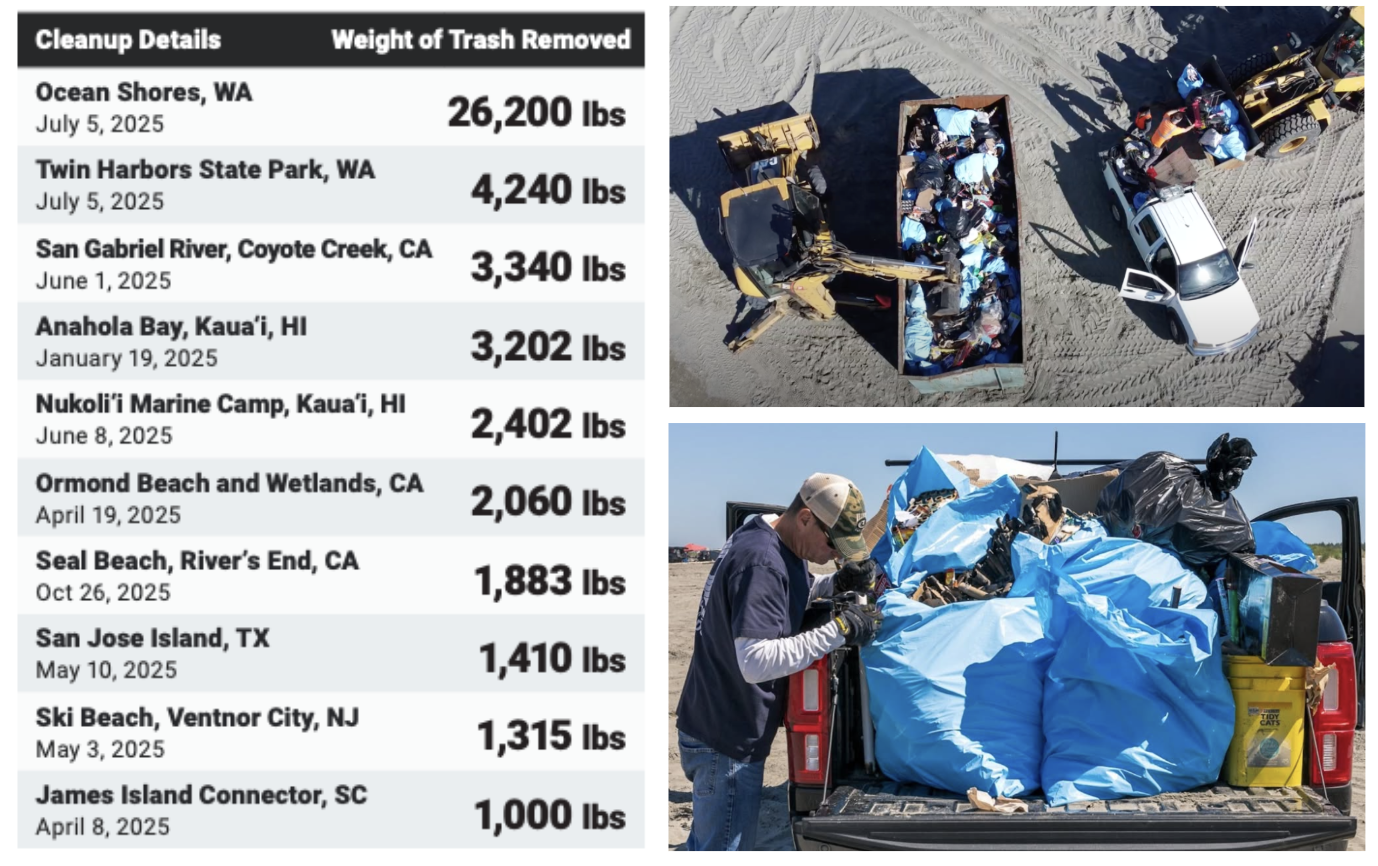 Washington had the top two biggest cleanups of 2025, both of which were in Grays Harbor on July 5th; these efforts involve heavy machinery and an army of volunteers working together.
Most days we try our best to collect data, which we then use to inform policy and other solutions to reduce the amount of trash being produced and left on the beach. But July 5th is more like battlefield triage - we’re scrambling to pick up as much as we can before it washes away, leaving no time to sort and weigh and fill out data sheets.
Having led cleanups on July 5th for the better part of a decade now, I feel pretty confident saying that around 75-80% of the trash we pick up is straight fireworks. There are the usual bottles and food wrappers and abandoned chairs, the occasional couch and other random finds - but the vast majority of what ends up in the dumpsters is fireworks.
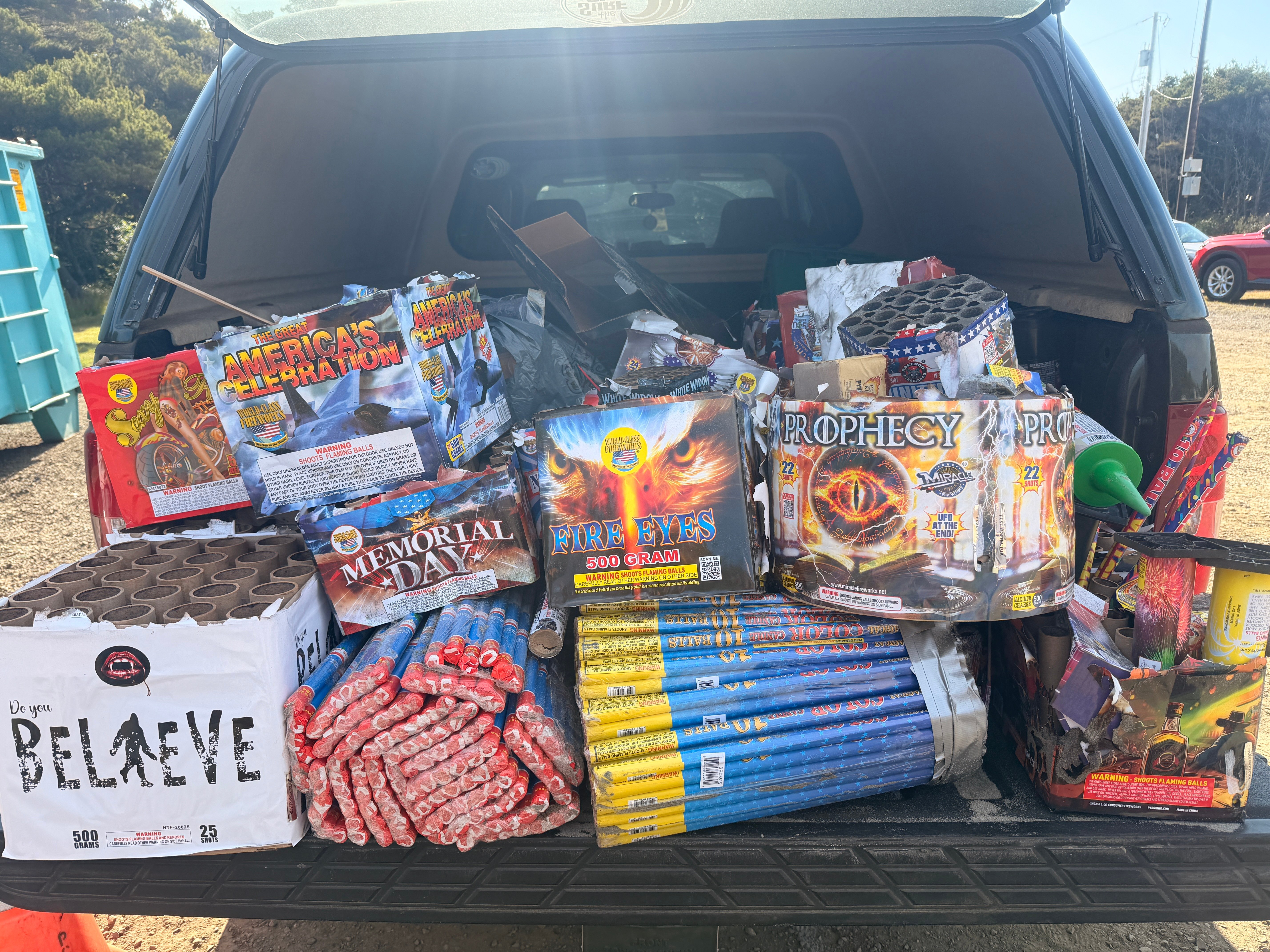 The bed of a truck chock-full of fireworks, which make up the majority of debris removed on July 5th, our "Dirtiest Beach Day"
The issue of fireworks on Washington’s beaches is one we’ve been working on for years. The problem is growing, and the solutions are more complex than one might think. Bans don’t work unless they’re enforced; there are a lot of overlapping jurisdictions with different rules and enforcement capabilities; and the agencies charged with enforcing those rules are often under-staffed and dealing with more urgent priorities (such as responding to injuries and putting out the dune fires that happen every year). That being said, we are exploring ways to reduce the damage. Nobody wants to kill the party, but I’m hopeful that one day, maybe, we'll find ways to celebrate that don't involve trashing the places we love, and leave the beach better than we found it.
Till then, to everyone who helped clean up this year: THANK YOU!
 While completing her master's degree in Sustainable Development & Conservation Biology from the University of Maryland, Liz taught sustainability to undergraduate students while also volunteering as a docent at the Smithsonian Natural History Museum’s Ocean Hall. As Washington and Alaska Regional Manager, she supports the organization's six Washington chapters and the Kenai Peninsula Chapter in their amazing work.